Contract and commission work is always a battle, like any negotiation. Everybody is looking to get all they can and no one is sure what’s possible. It’s a real struggle for the client and the service provider. Nobody likes to feel cheated or ripped off. Nobody wants to undercut themselves or miss out. I suspect if you really got to the root of things, most freelancers and business owners would put negotiating contracts as one of the biggest pains in their backsides and sources of stress. So how can we make things better? Something I think that will help is people thinking about what I call their purchasing dynamic.
What is a purchasing dynamic? It’s how you value or rate the importance of fundamental aspects of a project and their interrelation – Good, Fast and Cheap. This is also known as the Project Management Triangle. While the origins of this concept are lost, it’s a common concept in project management. Any project can be measured in the three dimensions of quality, speed and cost, with these three traits fundamentally at odds with each other. They represent a balance, helping to visualize the constraints or struggles that the project must manage to find success. This is a simplified model that can reveal to parties the vital dynamics underlying a project that can help clarify the needs, desires and constraints on a project that can and should simplify the contract negotiations.
A System of Balance
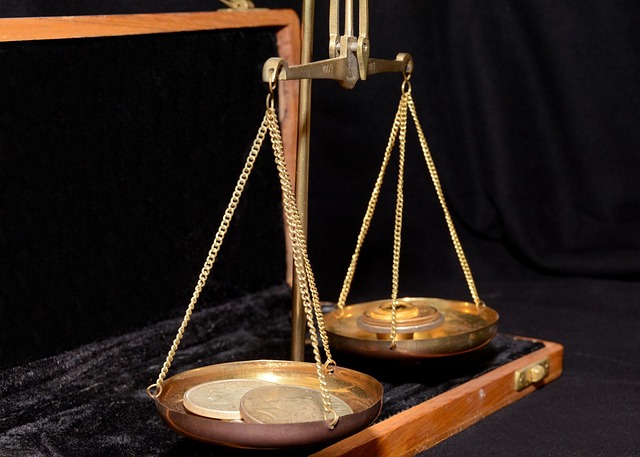
A given project has a budget (constrain on cost), timeline (constraint on time) and goal or output (constraint on quality/scope). Project management is about accounting for these three constraints and ensure project success. Management is the awkward dance when the idealized concepts meet the harsh realities of production. Somehow things need to get done, but they’re never as easy as imagined in the brainstorming sessions. Good, Cheap, Fast is about compromise. Few things in reality can maximize quality, speed and cost, if they can they’re probably no-brainers that people don’t need help with and don’t offer unique advantages. Its the struggle to find solutions to the hard problems that offers value and opportunity.
We all want to move forward, but the universal law of inertia is a problem. You can’t just move, you need a force, and there will be an equal and opposite force created. When we walk we push back on the Earth to push the rest of us forward. If we want a project to push towards quality, we need to leverage another dimension to provide a way to move forward – you’ll need to take time to do it, or you’ll need to pay to make it happen. The GCF triangle is a reminder that everything is a balancing act. When you set a constraint, that cost has to come out of other factors to succeed – nothing is free. The common phrase is “choose two” because you have to have the third factor as a compromise to get what you want, it’s your leverage. If we can get two of the three on any given project, that gives us three possible combinations. Essentially you’re choosing what you can compromise on.
Good + Cheap = Passion Project

A project that has to be Good (high quality) and Cheap (low cost), must sacrifice Fast (speed). These are passion projects, they take what time it takes to get it right. If they can’t push the budget, then they’ll likely end up toiling away for a while on the back burner. A lot of artistic and academic projects end up in this category. These projects aren’t a priority or they’d push the budget to get done, which would switched them to a Premium project where Cheap becomes the sacrifice instead of Fast. If they are needed Fast, but can’t increase the budget, then cuts to the quality or scope of the project will be needed, making them a Routine project sacrificing Good instead of Fast.
The Time : Cost dynamic is a tricky one. If a project is taking time, it is taking money. Paying one person to work on something for 2 months is the same salary cost as paying 2 people to work for one month. Sacrificing time won’t always enable cost savings. What is generally more common is a lowering of priority. Having the work only be a part-time effort, allow the resources to be shared with other projects to reduce their time:cost burden while the project proceeds.
I would say that this is the least common form of commercial project. The dynamics simply don’t work well in a commercial environment. It is very common for side-hustles, non-profits, and artistic or academic endeavours. Where profit isn’t being made, money is the biggest issue, if quality is still necessary (such as to ensure a social cause, artistic vision, or scientific rigour are being upheld) then speed becomes the sacrifice. This can be very hard to hire for because contractors want to be done, free and paid on projects as quickly as possible so they can move on and get their next project (and paycheck). Time is cost to a contractor, so Passion projects are directly at odds with folks that need to pay the bills. One option that can help with this is by addressing stability. A lower but longer term and constant retainer fee can provide a freelancer stability which can take pressure off them to find new projects as quickly. Though the lower pay does mean they will still need to be able to divert some attention and time to other income projects, so a Passion project client will need to give up flexibility to their contractors and may not be able to have fast responses or strict deadlines/attendance. Another alternative is that Fast can have two potential vectors – Project length and Release times. A project could take a longer time to get to launch, or the project could be broken into stages, maybe a minimum viable project could be launched earlier, but other features could be rolled out over time to provide some time flexibility to leverage.
Good + Fast = Pro Project

Projects that need to be high quality (Good) and get done quick (Fast) are going to cost a lot, sacrificing Cheap. If you need the best, and you need it fast you’re going to need to throw more of the best resources at the problem. This is often a painful proposition for those businesses or individuals early on their growth track. When cash flow is light it can be hard to invest in a Premium project. Of course, premium projects are often what make the most difference. They are the mark of a professional organization, bringing quality products at a consistent rate to maintain market standing.
Good requires talented professionals, which don’t come cheap. Fast means more resources and focus, which again, has a cost either in quality or price. With quality not touchable fast comes at a cost. So it should be no surprise these kinds of projects sacrifice Cheap. You have to pay to make this kind of project happen, it’s the only place left to sacrifice. Though it is important to note that Good has two possible interpretations, quality and scope. This is often the alternate compromise, that quality can be maintained, but the project shrunk to help keep costs down. This is a more moderate position, offering a tempering of the demands of Good, allowing some leverage on two sides of the triangle. You might get the amazing results, but will they be enough? Will the project have the depth to satisfy with it’s scope cut? There is wiggle room within any category, but everything is a trade-offs you’ll need to consider, understand, and live with.
While this is the most iconic kind of commercial project, it isn’t the most common. It simply sits in memory because of the impact these projects have. These are the showcase examples of creativity. Our misconception that these are the most common projects shows the impact and importance of these kinds of projects for capturing the public’s eye. There’s a time to put the money on the table and invest in making statement pieces. That said there’s only so much money to work with. Know when you can or can’t aim for Premium, or when you need to cut scope to maintain quality and speed.
Cheap + Fast = Routine Project

The last kind of project is a Routine Project. Here the project needs to be Cheap & Fast, which means Good, or quality, is the sacrifice. As we discussed above, Good can mean quality or scope, so routine projects can be less amazing, less innovative or less polished on the quality side, or they could have reduced features, less depth, less applicability or less universality on the scope side. Cheap and Fast are a lot more clear a term, but Good has a lot of interpretation and flexibility. Cheap and Fast means a lot of production capacity, routine projects are a good way to get a lot of material pumped out.
Sadly, Cheap is one of the most difficult barriers to work with, dollars don’t stretch much. Fast can also be a tough barrier, with all the unforeseen issues of production eating up time that can’t be replaced. So it might be surprising to think that this is the most common kind of project, but it’s that Good is such a flexible parameter that make it such a convenient place to get leverage. Most business is done with Routine projects – “Don’t let perfect be the enemy of the good” isn’t just a phrase for creatives. Innovation and perfection are costs that aren’t always worth paying. There’s a lot to be said for stability, and Routine Projects are stability. Most companies want a baseline of stability as their core operation, and then use Premium projects as special cases, they know the importance of stability. I think the key to making a good working relationship with contractors is understanding their desire for stability too. While few contractors are going to want to sign up for “Cheap” projects, if you can develop a relationship based on repeat work they can see the value of stability and be more comfortable with signing “cheap” contracts. They don’t want to lose out, but ongoing business is worth something, saving them the hassle of chasing down new leads. Of course there’s only so much they can take on faith, and they do need to be paying the bills.
Routine projects can be a wonderfully comfortable way to operate. They provide the client the reduced price point, but they provide the contractor some flexibility on quality/scope to get the project done. A successful relationship can be made if each side comes to the table understanding the pressures and needs of the other and can offer some compensation and relief. Routine projects can be a lower stakes way for a client and provider to find a good working relationship where Premium projects can add too much pressure for an early relationship.
The Bottom Line
Thinking through your approach and position regarding a new project is a critical basis for good project management, and that extends to contracting out. By knowing what balance you’re aiming for, or willing to live with, you can find better common ground with your outsources and your team. Not every contractor will be right for every project, even ones you have a longstanding relationship with, sometimes the dynamics shift. By knowing your position and being able to talk with contractors about that position you’ll be better able to find the right match and the right working relationship for project success.
If you’re looking for digital interactive project commissions, Massive Corporation offers a range of services focused on promotional and educational game development and services. If you need help figuring out your project and how to approach an idea we can help you get started with a free consultation so you can better plan how to move forward at any step of the process. Drop us an email (info at this URL) today and we’ll be happy to help!
